
The Low Harm Hedonism Initiative develops and validates a new theory that explains, predicts, and elicits pro-environmental conduct among consumers in enjoyment-focused settings. We challenge the assumption of conventional theories about universal drivers of human behaviour, asserting instead that increased enjoyment or changed infrastructure are needed to boost pro-environmental actions in hedonic contexts.
The outcomes and benefits are effective, evidence-based social interventions that reduce the significant environmental burden of tourism and other enjoyment-focused activities, without compromising customer satisfaction or financially burdening businesses.
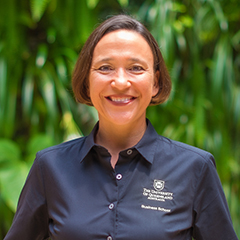
Lead researcher
Our team of experts from multiple disciplines worldwide collaborates to create sustainable solutions.
Pro-Environmental Behaviour
We design interventions that change behaviour, making sustainable choices easy and enjoyable for tourists.
Our new theory of behaviour, the habit-effort-enjoyment theory, outperforms the dominant cognition-focused theories.
We also pioneered an Internet of Things-based wireless sensor system to measure behaviour change in real time.
Impact
- less plate waste and cotton napkin use at hotel buffets
- more guests waive unnecessary daily room cleans
- less air conditioner and hand towel use in hotel rooms
- more bookings for lower emissions hotel rooms.
Resources
Watch our videos on YouTube:
Find more videos on the Low Harm Hedonism playlist
Market Segmentation
We deliver advanced segmentation analysis for better data outcomes.
In partnership with Energex, we analysed household energy consumption patterns to shift usage. From this research, we developed a new method: dynamic segmentation.
Read the book:
Watch market segmentation videos
Better surveys
The Better Surveys Project is a collaboration between leading research academics and practitioners to run and publish new experiments in survey design.
We investigate questions such as:
- What makes surveys perform well on phones, tablets and other small-screen devices?
- Do ‘more interesting’ survey questions produce more valid data?
- How can we reduce burden and length without reducing insight?
- How can we lift survey participation rates?
- What helps people complete surveys honestly and carefully? And how can we tell if they don’t?
Airbnb
Peer-to-peer accommodation networks – such as Airbnb – have disrupted the accommodation sector and pushed boundaries the tourism industry did not even know existed.
Read the books:
- Peer-to-Peer Accommodation Networks – Pushing the Boundaries
- Airbnb before, during and after COVID-19
Watch peer-to-peer accommodation videos
A powerful new database to inform consumer advocacy and test the effect of market interventions (2025 – 2027)
Funding: Energy Consumers Australia grant - $298,062
Awarded to: Sara Dolnicar, Marius Portmann, Bettina Grün, Siamak Layeghy
Making a Sustainable Tourist (2019 – 2026)
Researcher: Sara Dolnicar
Funding: Australian Research Council Laureate Fellowship grant - $3.2m
Mechanisms of Behaviour Change Theory (MeBeC) (2025 – 2028)
Researchers: Sara Dolnicar, Bettina Grün, Marius Portmann, Danyelle Greene, Anna Zinn, Siamak Layeghy
Funding: Australian Research Council Discovery grant - $519,771
Extracting insights on household electricity consumption patterns from SMART meter data and developing behaviour science approaches to influence them (2025)
Researchers: Sara Dolnicar, Marius Portmann, Siamak Layeghy, Anna Zinn, Danyelle Zinn, Oscar Zhu, Sarah Macinnes
Funding: Energy Queensland - $170,000
A la carte hotel room cleaning – Does more consumer choice improve environmental sustainability and reduce hotel operating cost? (2023)
Researchers: Sara Dolnicar, Marius Portmann, Bettina Grün
Funding: The University of Queensland Business School - $9,917
Maximising industry uptake of evidence-based consumer behaviour interventions (2022)
Researchers: Sara Dolnicar, Sabina Albrecht, Danyelle Greene
Funding: The University of Queensland Faculty of Business, Economics, and Law - $5,737
Reducing plate waste in hotels - which interventions are most effective? (2021-2025)
Researchers: Sara Dolnicar, Monica Chien, Ya-Yen Sun, Marius Portmann, Bettina Grün, Emil Juvan
Funding: Australian Research Council Linkage grant - $360,758
In collaboration with Queensland Hotels Association, Tourism Accommodation Australia, Pacific Asia Tourism Association and Slovenian hotel associations
Sustainability Award (2026)
Awarded by: Society for Education and Research Development (SERD)
Awarded to: Sara Dolnicar
Research Culture Award for Leadership in Research Support and Management (2024)
Awarded by: The University of Queensland
Awarded to: Sara Dolnicar
Food Waste Action Award (2024 Finalist)
Awarded by: End Food Waste Australia
Awarded to: The Low Harm Hedonism Initiative in collaboration with Hilton Surfers Paradise
Excellence in Graduate Research Training – Industry Engagement (2023 Commendation)
Awarded by: The University of Queensland
Awarded to: Sara Dolnicar
Real Impact Award for Driving the Impact Agenda (2023)
Awarded by: Emerald Publishing
Awarded to: The Low Harm Hedonism Initiative
iAward for Sustainability (2022)
Awarded by: iAwards Queensland
Awarded to: The Low Harm Hedonism Initiative
Business and Management in Australia Leader Award (2022)
Awarded by: Research.com
Awarded to: Sara Dolnicar
Eureka Prize in the category Outstanding Mentor of Young Researchers (2022 Finalist)
Awarded by: Australian Museum
Awarded to: Sara Dolnicar
Among the top 40 lifetime achievers in their field (2021)
Awarded by: The Australian
Awarded to: Sara Dolnicar
Award for Professional Excellence – Research Student Supervision (2021)
Awarded by: The University of Queensland Faculty of Business, Economics and Law
Awarded to: Sara Dolnicar
Award for Professional Excellence – Teamwork (2021)
Awarded by: The University of Queensland Faculty of Business, Economics and Law
Awarded to: The Low Harm Hedonism Initiative
Research Partnerships & Translation Awards – Research Impact (2021)
Awarded by: The University of Queensland
Awarded to: Sara Dolnicar & Melanie Randle, in collaboration with CatholicCare Wollongong and CareSouth
Eureka Prize in the category Outstanding Mentor of Young Researchers (2021 Finalist)
Awarded by: Australian Museum
Awarded to: Sara Dolnicar
Through Research award (2021)
Awarded by: Alimara CETT (Barcelona School of Tourism, Hospitality and Gastronomy)
Awarded to: The Low Harm Hedonism Initiative