

How 'microshifting' is reshaping flexible work:
From focus blocks to hyperscheduling
Featured UQ experts Associate Professor Stefan Jooss, Associate Professor Anna Jenkins and Dr Caroline Knight
with industry leader Tim Walmsley
The traditional 9-to-5 office job is all but extinct. While it’s easy to attribute its decline to COVID, the shift away from rigid working hours was already well underway.
Physical offices still remain, but the synchronous 40-hour work week has evolved into a tapestry of hybrid workdays, remote staff, flexible hours, results-focused work and technology-enhanced tasks.
Microshifting is the latest workplace trend to emerge as employees seek work-life balance and leaders strive to retain and support their talent.
The term ‘microshifting’ was first introduced in a State of Hybrid Work report by US technology company Owl Labs in September 2025.
More an extension of existing hybrid work models than a wholly new concept, microshifting empowers employees to break their 8-hour workday into smaller, non-continuous blocks or 'micro shifts'.
It affords people greater work-life balance and flexibility: structuring work around peak energy times or to accommodate personal commitments such as caring for children and elderly relatives, balancing second jobs and side hustles or attending appointments.
Take, for example, a working parent who starts at 6:30am, breaks from 7:30am to 9am to get their young children ready for school, works until pick-up time at 2:30pm, then returns to finish their workday. Or an employee who prefers to start at 10am, takes a mid-afternoon break to exercise and complete life admin, then returns to finish their work at night.
The University of Queensland Business School experts Associate Professor Stefan Jooss, Associate Professor Anna Jenkins and Dr Caroline Knight laud microshifting as a way to improve both workplace productivity and job satisfaction.
They also caution business leaders to set clear expectations around microshifting to establish trust, measure performance and ensure an ‘infinite workday’ doesn’t result in employee burnout.
Boundaries and burnout:
The wellbeing benefits of microshifting
Breaking workdays into manageable blocks may support mental health and prevent burnout, but only if the right supportive infrastructure is also in place, says UQ Business School Senior Lecturer Dr Caroline Knight.
Her research into hybrid and flexible work centres on the importance of driving trust and autonomy to support employee wellbeing.

“Giving people flexibility at work is a powerful way of offering them autonomy,” Dr Knight said.
“Research shows that people like being trusted with autonomy – they like feeling as though they have input and control over their work, and that’s more likely to lead to an improved sense of wellbeing.”
Flexibility can also improve access for people who find the traditional 9-to-5 office structure a barrier to workplace participation.
“Microshifting can certainly help carers and parents, but it can also support others, such as people who consider themselves neurodivergent, who may find busy workplaces too noisy or overwhelming, for example,” she said.
Dr Knight acknowledged that leaders and employees had a joint duty of care to mitigate some of the potential downsides of microshifting to avoid stress and burnout.
“It’s so important to a person’s mental wellbeing to have periods where they can detach completely from work and effectively recover,” she said.
“While microshifting may afford people the flexibility to schedule blocks of time away from work during traditional business hours, without clear boundaries, they risk psychological strain.
“If people are still checking their phone constantly, responding to emails and thinking about work during their downtime, they aren’t experiencing meaningful work recovery, and that can lead to higher levels of distress and burnout.”
Productivity:
Does microshifting help or hinder performance?
Structured focus blocks, combined with short, intentional recovery periods, can improve productivity.
This is the principle behind the Pomodoro Technique, a time management method popularised in the 1980s that operates on a similar principle to microshifting, Dr Knight said.

Stefan Jooss
But rather than segmenting the workday into hours-long blocks, the Pomodoro Technique advocates 25-minute, highly focused intervals, punctuated by 5-minute breaks to boost productivity.
“There’s definitely existing evidence that supports taking short breaks in a day between blocks of high-focus work,” Dr Knight said.
“These breaks don’t have to be big; they could be going for a walk or making a cup of tea. Scheduling long breaks is where things may become a little difficult because you become disconnected and have to spend time getting back into your work again.”
Human resources management expert Associate Professor Stefan Jooss said high performance in microshifting environments depends on replacing control with clear expectations and autonomy.
“Without trust and autonomy, the workplace can drift towards increased monitoring, presenteeism or excessive time spent coordinating work – where employees spend more effort aligning schedules, messages and expectations than actually getting work done,” Dr Jooss said.
Microshifting also presents an opportunity for business leaders to reframe how they measure performance.
“Organisations should define success in terms of deliverables rather than presence or availability,” Dr Jooss said.
“Work is no longer structured around fully shared hours, so organisations need clearer goal-setting and reduced reliance on instant responsiveness as a proxy for performance.”
Guidelines and guardrails:
How HR frameworks can support effective microshifting
Drawing on his extensive research into workforce transformation, Dr Jooss found that microshifting is most effective when it’s lightly structured and supported by a few simple HR guardrails, rather than enshrined in rigid workplace policy.
“Flexibility works best within clear boundaries, but what that looks like depends on the type of work,” he said.
“In individual and independent roles, a high degree of flexibility is often already happening in practice.
“In more interdependent, team-based work, an agreed span of hours – for example, 7am to 7pm – is more realistic to maintain coordination.
“Importantly, flexibility needs to sit within clear HR wellbeing frameworks that protect against an always-on work culture. The key is ensuring flexibility doesn’t quietly drift into expectations of constant responsiveness or longer working hours.”
Dr Knight suggested employees could also feed into HR policies and norms around microshifting to support team collaboration while protecting individual flexibility.
“Initiating discussions within teams gives them the autonomy to create their own solutions and a sense of control over their work,” she said.
“For instance, a team may decide to designate 1 or 2 ‘anchor days’ when everyone is in the office or working synchronously, then, on the other days, they can microshift.”
AI technology can support microshifting by improving scheduling and prioritisation, automating routine tasks, and facilitating ‘asynchronous collaboration’ – when team members work together, but not necessarily at the same time.
However, Dr Jooss cautioned that AI use can also set unsustainable and unhealthy expectations for employees.
“AI isn’t the origin of these pressures, but it can amplify existing patterns,” Dr Jooss said.
“This technology should be used to reduce coordination load rather than increase speed expectations.”
For more evidence based insights on modern workplaces, subscribe to Momentum
8 ways leaders can successfully manage microshifting
Set clear expectations around availability by modelling boundary-setting behaviour and avoiding implicit 24/7 responsiveness norms. Without clear leadership signals, flexibility can quickly turn into an ‘infinite workday’.
Explicitly define when employees aren’t expected to be available. This approach is consistent with Australia’s Right to Disconnect framework, which reinforces employee protections around after-hours availability and supports clearer boundaries between work and personal time.
Proactively audit access to workplace flexibility across roles to avoid creating an unfair and unequal work environment.
Ensure cultural reinforcement of employee recovery time and downtime to prevent boundary erosion as microshifting – alongside evolving tools and technologies – reshapes when and how work gets done across the day.
Support employees to maintain concentration by protecting their focus blocks (for example, by diarising these focused times so meetings aren’t booked in) and encouraging them to limit reactive task-switching throughout the day.

Shift performance conversations from hours worked to clearly defined outputs and deliverables.
Reduce employee monitoring and, instead, increase clarity around priorities and expectations to build trust.
Establish shared team coordination norms (such as anchor days or agreed handover processes) to support collaboration without undermining individual flexibility.
Leading by example:
How microshifting supports founders and entrepreneurs
Microshifting isn’t just reshaping how employees work – it’s also influencing how founders and entrepreneurs design their days.
For many leaders, microshifting has evolved into a form of hyperscheduling: a productivity technique in which days are divided not only into focus blocks, but also into detailed, disciplined time blocks that map out everything from work tasks to meal breaks.

Anna Jenkins
UQ Business School Associate Professor Anna Jenkins said her research into high-impact entrepreneurship shows this iteration of microshifting can help mitigate the uncertainty small business leaders face as they build their ventures.
“Founders need to create the routines that form the foundation for their businesses,” Dr Jenkins said.
“Being able to block and allocate time to perform different tasks can help manage the multiple roles they need to play.
“Similarly, in small-to-medium enterprises, leaders face the competing tensions of working in the business and on the business. There’s a constant tension where they need to find time for both.
“Founders often describe engaging with customers as like playing a role; there’s a performance aspect to it, one that’s not needed when they’re developing strategies or doing the accounting.
“Distinct blocks of time to separate these different task types can help limit the mental and emotional shifts needed to switch roles.”
Case study
Tim Walmsley is the Founder and CEO of The Industry Platform, an AI-powered digital ecosystem that matches organisations with suppliers across industries. His key to juggling full-time work, family commitments and establishing his startup came from his 12-year tenure in the Australian Army.
 “In the military, every day of every week was planned out – I knew what was going to happen and all I had to do was follow the schedule to keep forward momentum,” Mr Walmsley said.
“When I left the military, I gave away the routine until I realised that as a startup founder, your attention is drawn everywhere. Rather than finding freedom in it, I found the lack of a schedule to be claustrophobic and overwhelming.”
Mr Walmsley found his solution in microshifting.
He segmented his day into focus blocks that allowed him to work full-time while growing his startup. Within these blocks, he hyperscheduled each day, right down to his coffee breaks and morning run.
“It sounds like a lot, but what I found was that I could look at my week and know I could get everything done; I didn’t need to stress,” he said.
“I was calm, clear-headed and able to work through my week.”
The Industry Platform now offers its fully remote workforce microshifting opportunities, provided there’s some predictability within the flexibility.
For instance, some employees regularly work around school drop-off and pick-up times, and others work in different time zones.
However, changing work schedules day to day is discouraged, as it can be challenging to maintain smooth business operations.
Microshifting signals a decisive shift toward work designed around people, not the clock.
When underpinned by trust, clear expectations and genuine respect for boundaries, it offers a pathway to higher performance without sacrificing wellbeing.
The challenge for leaders now isn’t whether to embrace flexibility, but how to shape it sustainably in a world where work is no longer confined to time or place.
Help shape the future of work with a UQ Master of Business Administration (MBA)
Associate Professor Anna Jenkins
Associate Professor Anna Jenkins is an expert in the processes and activities involved in creating high-impact startups; the development and evolution of startup ecosystems; and the impact firm failure has on small business owners’ wellbeing. Dr Jenkins teaches into UQ Business School’s MBA program.
Contact Associate Professor Jenkins
Associate Professor Stefan Jooss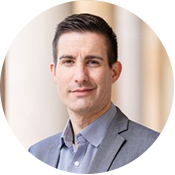
Associate Professor Stefan Jooss’s research focus is human resource management, with specialities in talent management, global mobility and the future of work. He teaches into UQ Business School’s MBA program.
Contact Associate Professor Jooss
Dr Caroline Knight
Dr Caroline Knight’s research centres on understanding how we can design and redesign work that’s optimal for health and wellbeing. Specifically, she’s interested in work design in the context of hybrid and remote work, and both top-down manager-led and bottom-up individual-led work redesign interventions.